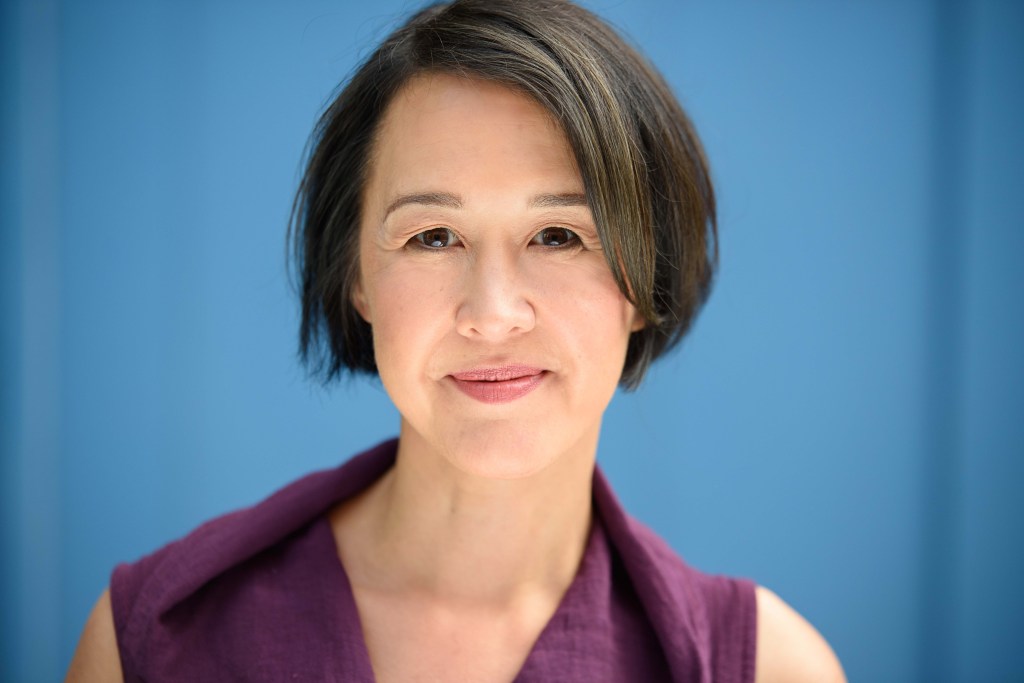
Educator, playwright and actor Michi Barall has been gracing center stage in theaters across the nation and in New York City for three decades.
First moving to New York from Toronto in 1993, Barall began her stint in the Big Apple at New York University, pursuing her M.F.A degree in acting. Prior to her New York move, Barall received her associated bachelor’s degree from Stanford University, where she immersed herself in the realm of cutting-edge theater at David Henry Hwang’s Stanford Asian Theater Project.
In fall 2008, she transferred to Hunter College in hopes of continuing her M.F.A program in playwriting, where she worked with the late playwright and professor Tina Howe. Since graduating, Barall has closely collaborated with the Ma-Yi Theater company and other theatrical troupes before beginning a stint as a college professor.
Barall has taught at NYU, Columbia, Massachusetts Institute of Technology, and is teaching various theater topics at Purchase College. Now, Barall is starting a new chapter of her career: a multi-media original adaptation of her play, Drawing Lessons, which incorporates live illustration along with the actors on-stage. Drawing Lessons is set to run from Oct. 8 until Nov. 10 at The Children’s Theater in Minneapolis, Minn.
Drawing Lessons follows the story of Kate, a 12-year-old Korean-American girl living in Minneapolis, Minn. in the 1990s is thrown into the world of comic art by her mentor, Paul, a comic-artist. Raised by her single father, Kate embarks on a journey of self acceptance through art, navigates friendships and defines what being an American means to her.
Just days before the opening night of her play, Hunter alumni Michi Barall spoke with The Envoy on her time at Hunter, talked about Drawing Lessons, and offered her insight on life and her craft post-graduation.
This conversation has been edited for clarity.
You’re an actor and playwright who studied at multiple institutions, how did you find your way to Hunter?
I went to grad school at NYU for acting, I became very interested in European Dance Theatre and I was thinking of going back to school. I was so lucky to go to Hunter at the same time.I didn’t know much about the department, but there were so many incredible people who were there. In terms of the playwriting, Hunter was a really important space for me because I was able to study with Tina Howe. She was a person of such incredible goodwill, fun and whimsy. She was such a character and there was a sense of permission and community in her class. I wrote my thesis at Hunter, which was the first play that I had ever written that wasn’t an adaptation. It’s a play called Garbhagriha Womb House about surrogacy in India which features an American couple.
What would be your elevator pitch describing Drawing Lessons to a complete stranger?
The play is about a 12-year-old Korean American girl growing up in the 90s’ in Minneapolis with a single father. Struggling in school, struggling to find her place and purpose in the world until she meets a mentor in this comic book artist Paul. She begins to understand that all of the parts of herself, her heritage and the way of being herself in the world are a super strength and a positive identity.


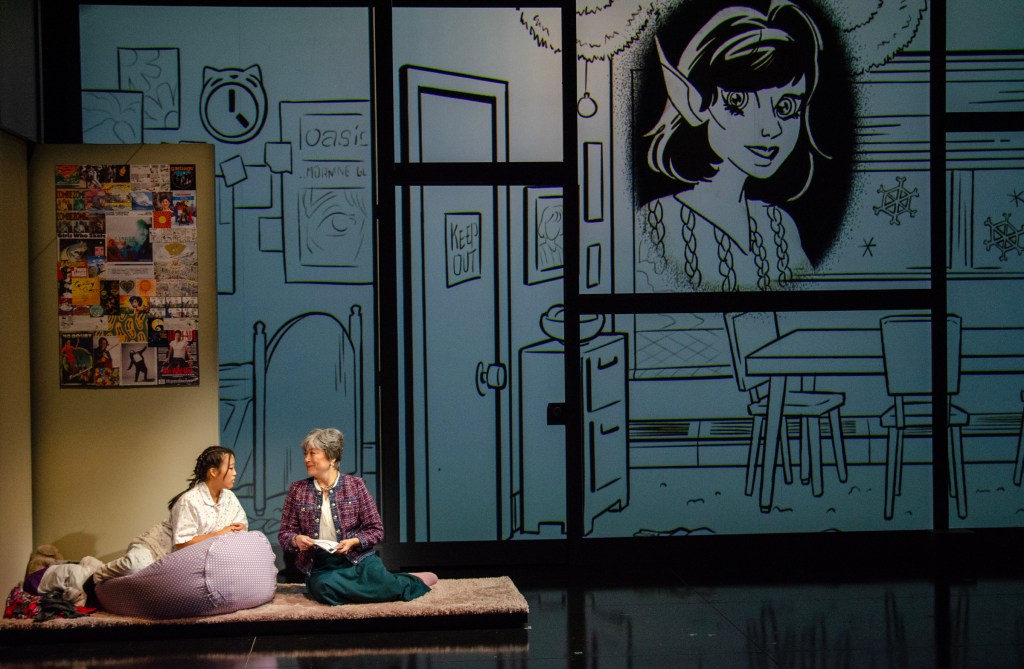
Photos from the debut of Drawing Lessons, of which illustrations play a prominent role in the story, even in the background.
Working with your long-term friend, and the director of Drawing Lessons, Jack Tamburri, how did the play’s concept come into fruition?
Jack and I were brought together by my theater [Ma-Yi Theater Company] to do a commission. Jack is a full-on clown and has an experimental spirit, he’s a good listener and is always open to hearing me talk out-loud. The prompt was: In what context can you build a play in which live drawing can be a theatrical and narrative feature. At the time, my daughter was in 5th grade and was bringing home lots of graphic novels. I wasn’t a person who had much fluency in comic art at all, but we became interested in a story that could use the devices and features of a graphic novel but center it on a 12-year old protagonist. We hope that the experience of seeing the play is like being in a graphic novel. It’s a play about becoming an artist.
Despite your growing up in Canada and late introduction to graphic novels, do you think any of the characters in Drawing Lessons mirror yourself in a way?
That’s so interesting, Kate’s experience is closer to mine than my daughter’s. Kids today they’re pretty intensely surveyed, there’s something important about the freedom of community and the people who take an interest in you. I’m Canadian so the play feels a little adjacent to me, but there’s something very northern about it [she chuckles to herself]. In some ways, I’m in all the characters, there’s parts of me that are thinking through the struggles that all the characters have and the connections they make. When I’m writing, I’m trying to work through something that I’m thinking about.
As a teacher, for aspiring actors and playwrights in college, how can young creatives build an uplifting artistic community together?
I like to tell my students all the time that there are so many American theater companies that emerge out of schools. Look around and see who you like to work with, make a mess! Use the spaces and the resources that are afforded to you, use the time. I think it’s so hard, often students are working or have other commitments. I felt so much freedom to pursue my curiosity and to connect with people who were open to connection, I felt like I could be seen. Stanford had an Asian American Theatre company, so there was this framework where I could be visible. Find the faculty and friends who will support you. College is a time to try and fail until you find something that feels like you!

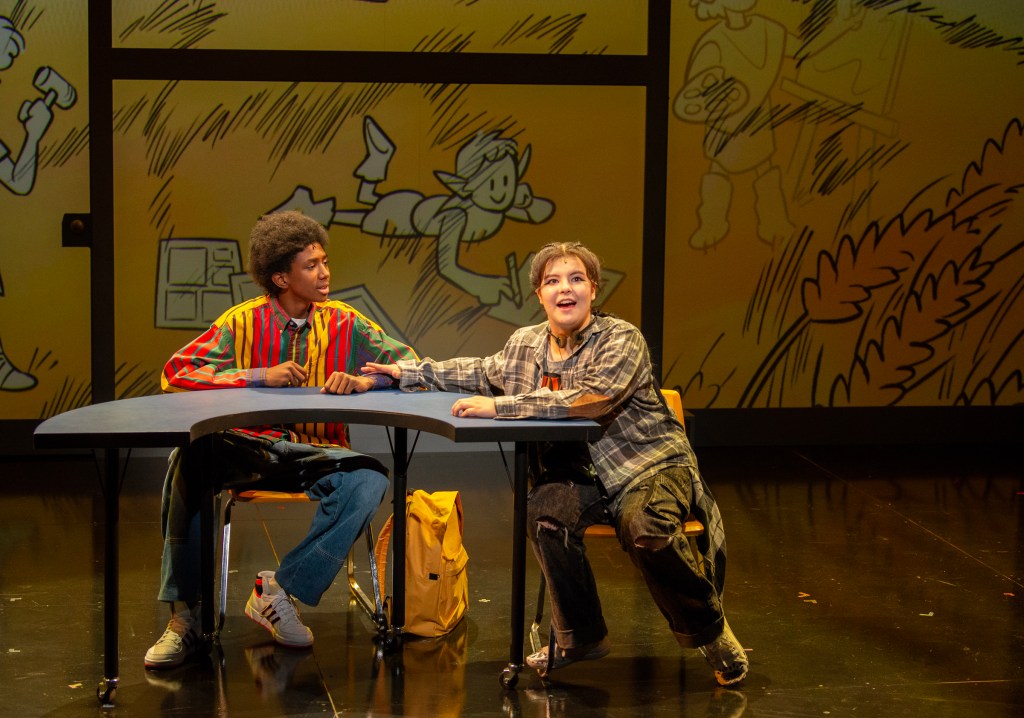
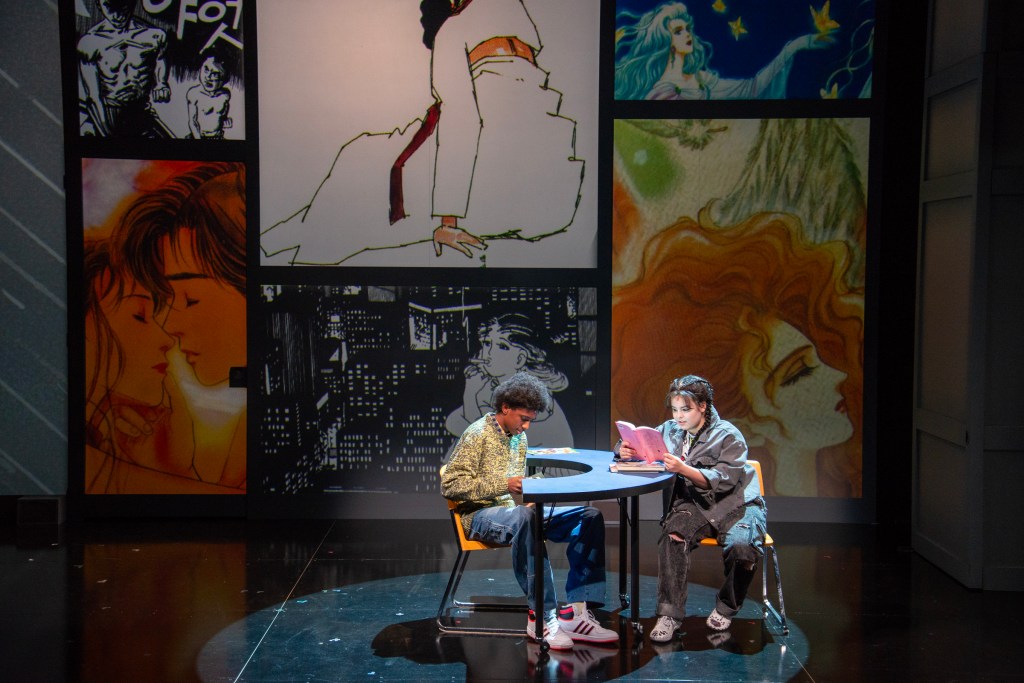
Drawing Lessons.
Throughout your career as a playwright and actor, how has your community uplifted you following the end of your higher-education journey?
There were two things: I was able to be a part of this emerging wave of Asian-American writers, writing new plays. I was in new play after new play, it taught me a lot about playwriting and how plays are constructed and how they change. Through that time period, Ma-Yi started a playwriting lab. I had a little bit of background from working with Tina and my husband is a playwright. In terms of playwriting, it was like diving into the deep-end. Ma-Yi let me do that, they’ve been a nurturing space for me to try and fail.
How does Drawing Lessons service young Korean Americans and other kids from mutli-cultural homes?
I was interested in not just foregrounding a Korean American protagonist, but also other second-generation kids. I’d identify as a second-generation immigrant kid. She [Kate] has friends, Omar who’s Somali-American and Lia who’s Latin-American. We looked for the exact neighborhood in Minneapolis where those communities might intersect with one another at school. I think they all give each other a sense of recognition, there’s this cosmopolitan ethos where all of their differences are things that make them distinct as people. They’re figuring out what it means to be American on their own terms.
Information about how to acquire tickets to Drawing Lessons can be found here.
 The Envoy
Leave a Reply