This piece is part of a larger narrative piece and podcast collaboration between The Paper at CCNY, The Baruch Ticker, The Lehman Meridian and The Envoy. This podcast takes a deep dive into CUNY sports. You can listen to “Beyond the Game: CUNY Sports Uncovered” here.
New York loves college sports. After all, just look at how we reacted when St. John’s broke their 25 year drought. Whether it’s the pros or college ball, this city shows up when its teams need them the most. We create stories from the lives of our college athletes, whether they come from humble beginnings, overcome personal tragedy/circumstances or defy the odds to make history. We look at our athletes as superhuman. To us they are supposed to be cultural icons, role models and perfect students all at once. We see our teams as extensions of the city, who hold up their schools’ ideals, history and lore.
NCAA Division One sports are seen as the pinnacle of this already glorified group of people. These are seen as just a step below the pros, especially in the age of NIL and the transfer portal. However, in the case of New York City (and the state as a whole), there are more D3 schools than D1. This state has 21 Division One schools and 60 Division Three schools, eight of which belong to CUNYAC.

CUNY as a whole is an important educational institution in New York and beyond. Yet its perception, even in the Division Three landscape, is a mixed one. It’s no surprise then, that these misconceptions have also affected the way our own city looks at CUNYAC.
CUNYAC student-athletes are often marketed as having the best of both worlds — the opportunity to pursue collegiate athletics while working toward their degrees and careers. Like other schools in New York, CUNY allows students to chase their athletic dreams, but there is a notable difference in the level of commitment expected. Unlike programs that demand full-time dedication to sport, CUNYAC encourages students to prioritize their education, reflecting the realities of a student body largely composed of working and middle-class individuals. Many CUNY students come from single-income households, live at home and work part-time jobs alongside their studies. The school-sport balance presents a significant challenge, as student-athletes often juggle full-time academics, athletics, employment and family obligations. These circumstances may lead to less athletic commitment, but they highlight the resilience and hard-working nature of CUNY athletes, who persist through numerous challenges to continue doing what they love.

Most of the country doesn’t see these qualities of CUNYAC. They like to point out its faults: Division Three athletes don’t get paid or compensated, so what’s the point? They might say there’s an extremely low chance of going pro or winning a national title. Your school’s facilities might be outdated. And your school could never make it out of the first or second round, according to tourney history.
Their criticisms may seem valid on the surface, but underneath lies a layer of ignorance and misguided intentions. CUNYAC provides a platform for students who would not have one otherwise. As the website states, “The student-athlete experience is of paramount concern.” Student-athletes are allowed to play without the added pressures of scholarship money being at stake, added mental health struggles, facing the odds of going pro, etc.
Students here are playing purely for the love of the game. CUNYAC, as a Division Three institution, gives “an intense and competitive athletics environment for student-athletes who choose to compete because they’re passionate about their sport, without the pressure of an athletics scholarship,” the website states. With more and more weight being put into materialistic gain from college sports in this new age with NIL (name, image, and likeness) deals and players making their college experience part of their brand, CUNYAC allows many CUNY students to be more connected to their schools. The athlete plays not for money or fame but to have a positive impact on their school’s community.
CUNYAC has helped women’s sports during this time in which it has exploded in popularity. For instance, Alexa Charles, vice-captain of Hunter’s Women’s Basketball team, has consistently won MBWA awards for D3 Player of the Week, CUNYAC Player of the Week and more. The same can be said for Mia Castillo of Baruch, who has reached a 2,000-point milestone and became CUNYAC’s all-time leading scorer in basketball. There is Heaven Figurioa of Lehman, who has also won MBWA/CUNYAC Player of the Week awards and was also named as an honorable mention all-American. These three would not have had a stage to shine on without the duality of CUNY’s athletic and academic programs.
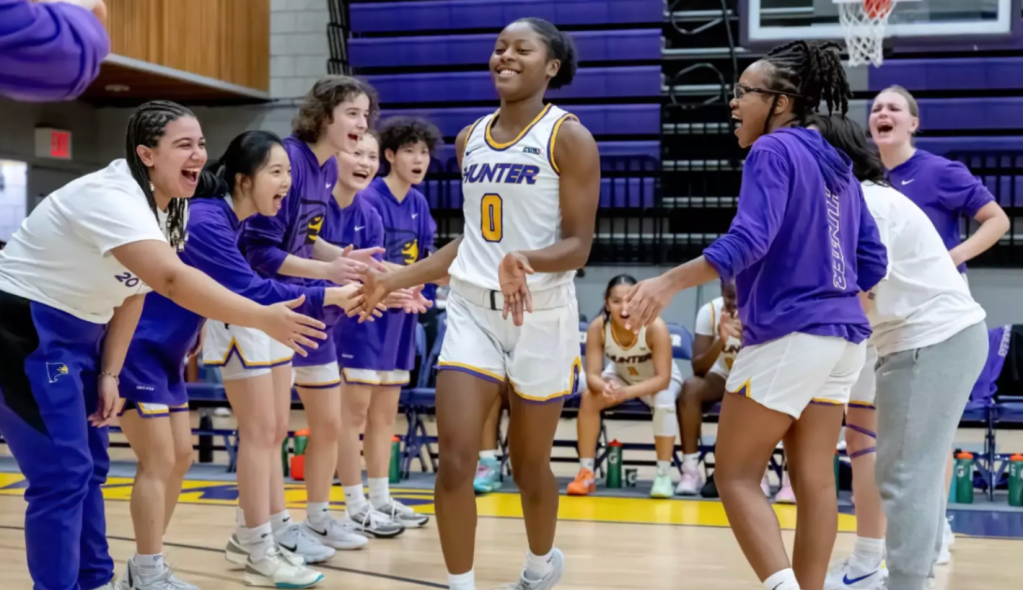
CUNYAC has given students, regardless of background or situation, a platform to launch themselves. For many students, it gave them the ability to balance their passions while pursuing a degree and some even continue to go further in their sport. Sharon Monplaisir of Hunter, Paul Dedewo of CCNY and Nicky Nieves of Queens College are just some of the athletes who competed on some of the biggest stages (Olympics, World Trials). We have ignored/neglected the quality of CUNYAC for too long. Their status in a “lower tier” Division Three school means nothing: to play in college is to play at a high level. It’s remarkable regardless of what school or division you play at.

So what does this mean in the bigger picture? Well, CUNYAC as a conference still has a long way to go. To increase our competitiveness and chances for national acclaim, it’s highly recommended that we increase funding for our teams and athletic facilities. In the meantime, our schools will continue to enroll and provide opportunities for student-athletes. A few thousand students around the city will have a chance to compete and win trophies for their conference and a national title. The conferences will continue to adapt to the changes in college sports and hopefully, one day, a CUNYAC school will be on the national stage again, not as a joke but as a national title-winning program.

 The Envoy
Leave a Reply