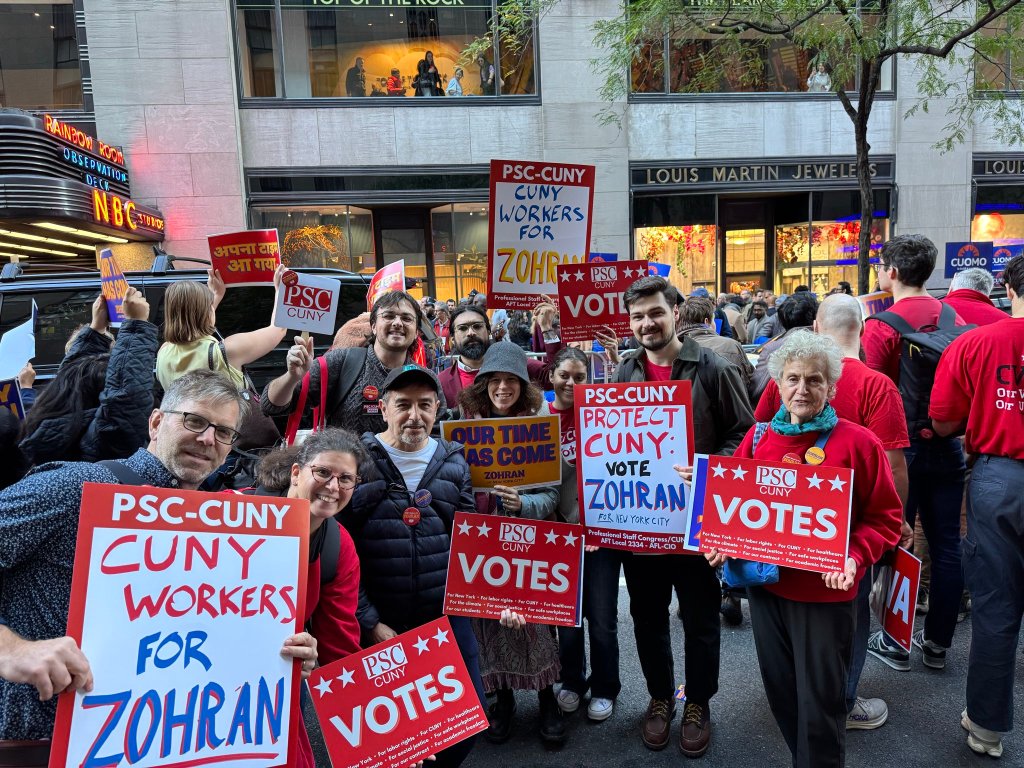
In October 2025, two Professional Staff Congress (PSC) chapter leaders, Kathleen Offenholley of Manhattan Community College and Michael Spear of Kingsborough Community College, were accused of “illegally” using a “taxpayer-funded, government email system to promote socialist NYC mayoral candidate Zohran Mamdani’s campaign.”
The Professional Staff Congress is the trade union that represents 30,000 faculty and staff across the CUNY system. This includes all full-time and part-time faculty, professional staff, graduate employees, and Research Foundation employees. The union negotiates collective bargaining agreements, provides legal counsel, and works toward improving the terms and conditions of employment for all its members.
The October article published by The New York Post states that Offenholley and Spear “fired off email blasts using CUNY email addresses to solicit faculty and other staff,” encouraging them to volunteer for the PSC’s phone bank event in support of the Mamdani campaign. The piece further alleges these actions “could include misdemeanor charges and fines up to $10,000 per offense.”
News of the story spawned discourse about political activism in the public service sector and accusations of left-wing “indoctrination” in academia. While faculty and staff are encouraged to be politically engaged, CUNY strives to maintain an environment conducive to viewpoint neutrality—” the requirement that the government not favor one speaker’s message over another’s.” A standard that certain critics believe the PSC violated by openly supporting the Mamdani campaign.
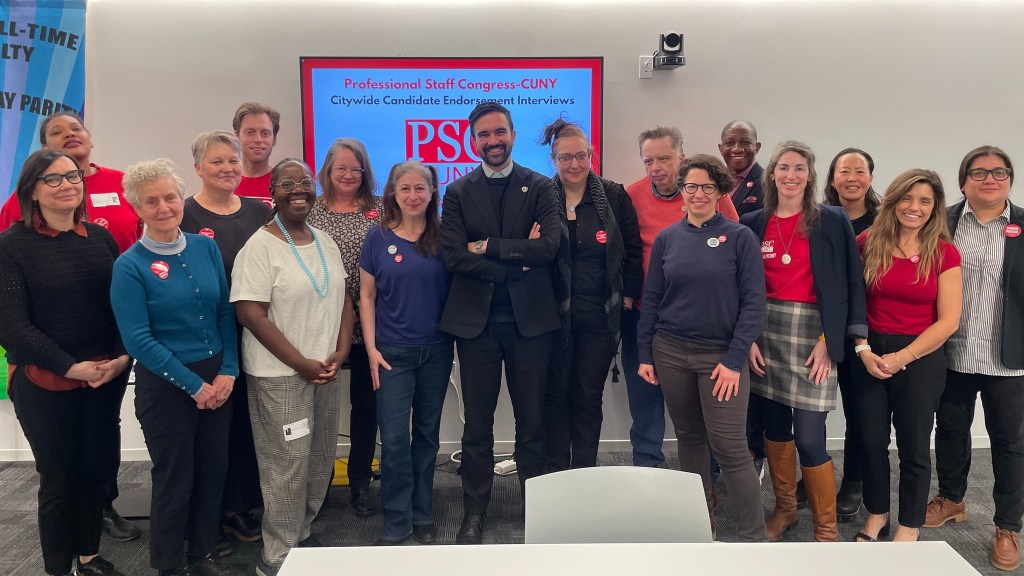
When asked about internal union communication through the CUNY email system, Fran Clark—Director of Communications for the PSC—gave the following statement:
“The PSC, and our members, have the right under our collective bargaining agreement to use electronic mail facilities for the distribution of PSC communications. Mayor-elect Mamdani’s election was a PSC union issue, directly tied to our members’ terms and conditions…Occasionally, member [sic] have inadvertently used their CUNY email addresses to forward PSC messages that are mainly about the PSC’s union activity but also included messages about Mayor-elect Mamdani’s campaign. We discourage this.”
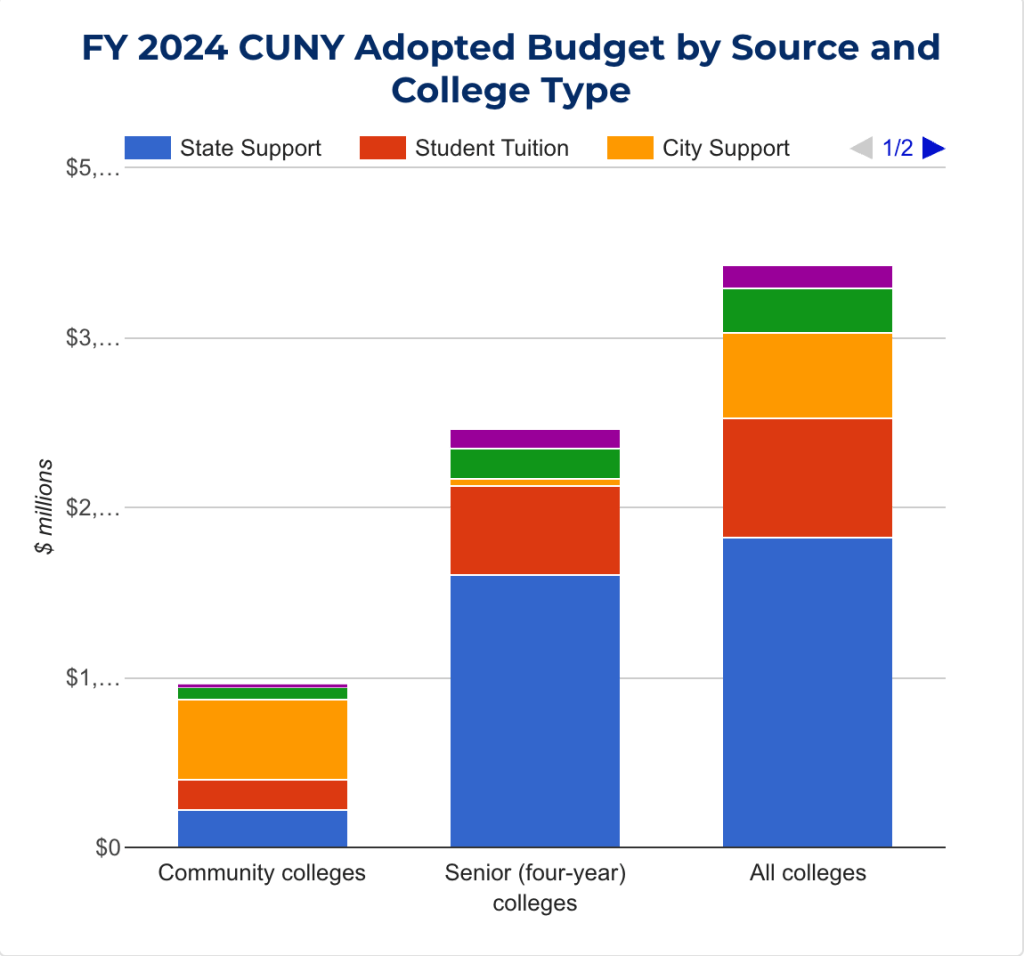
Although it represents public sector employees, the PSC is not a politically neutral organization. Part of its stated mission is to engage “in political activity on behalf of CUNY and its staff and students.” Since CUNY receives appromimatley 45% of its budget from New York State and another 15% from New York City, the union has a vested interest in local politics. The PSC makes public endorsements and encourages its members to elect candidates who will improve working conditions.
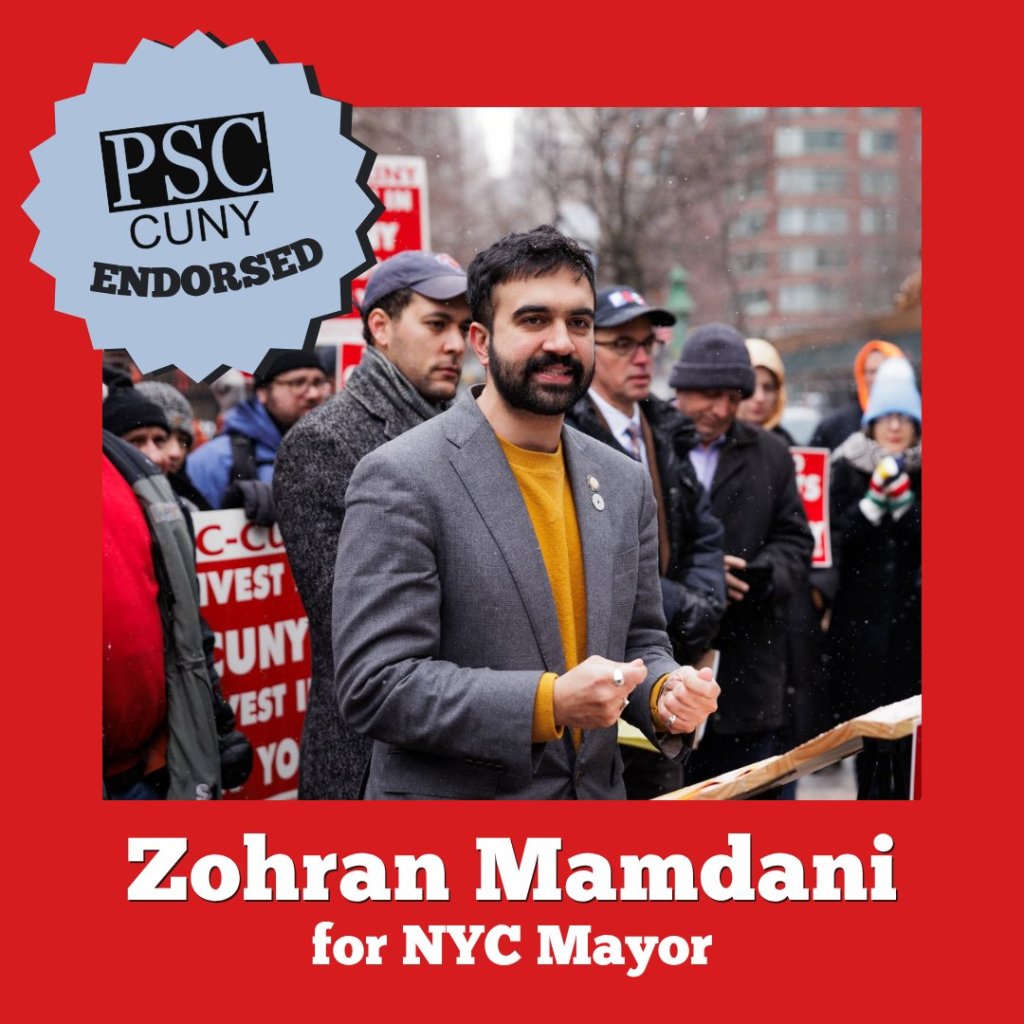
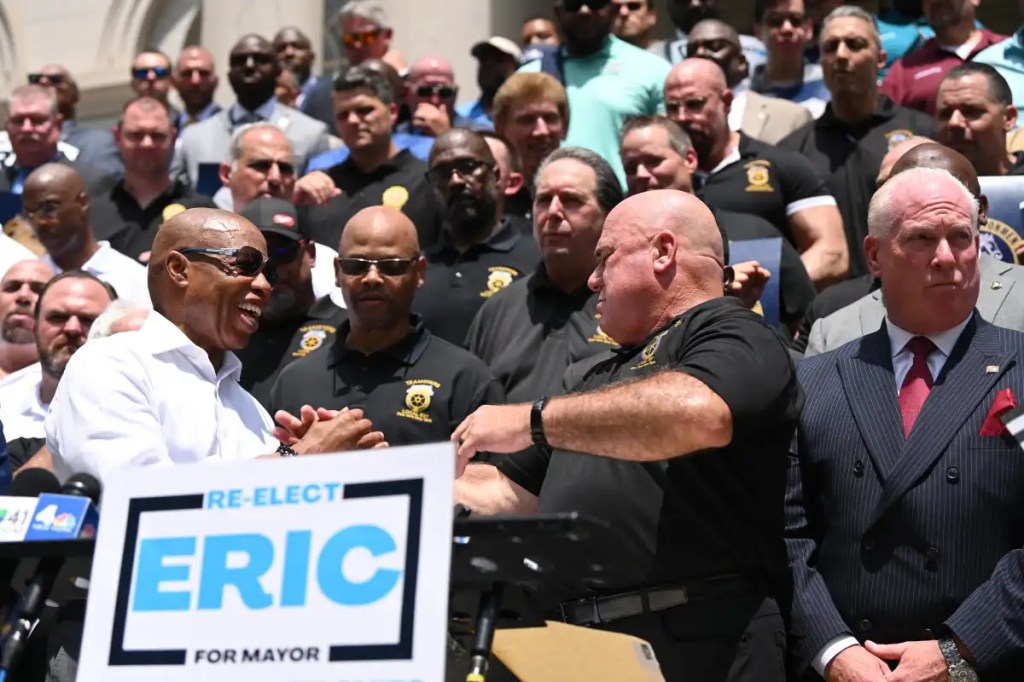
William Herbert— Distinguished Lecturer at Hunter College and the Executive Director of the National Center for the Study of Collective Bargaining in Higher Education and the Professions—says it is “very common [for unions] to engage in activities related to elections.” He points to police unions as counterexamples to the left-leaning unions of academia. Multiple law enforcement unions endorsed incumbent Mayor Eric Adams (a former NYPD captain) in last year’s election.
On campus and in the classroom, CUNY University Faculty Senate (CUNY UFS) policy states that faculty “should respect their students’ opinions and encourage students to express those opinions, and should be fair and objective in assessing student work.” This means, regardless of a professor’s personal politics or official union position, faculty “may not engage in partisan or religious proselytizing in their classrooms.”
Professors are not, however, expected to remain completely neutral or obscure their views on political issues. As long as speech does not violate CUNY’s Free Speech policy as a non-protected form of speech (harassment, incitement to violence, etc.) or viewpoint-neutality guidelines, freedom of expression for both students and instructors is the goal. In fact, the CUNY UFS Statement on Academic Freedom posits that “To insist upon neutral balance in the classroom ‘is fundamentally to misconstrue the nature of higher learning, which expects students to engage with the ideas of their professors.’”
In contrast to other parts of society, the unique freedom for faculty and students to speak uninhibitedly and engage with opposing viewpoints is what William Herbert calls “the beauty of academia.”

 The Envoy
Leave a Reply