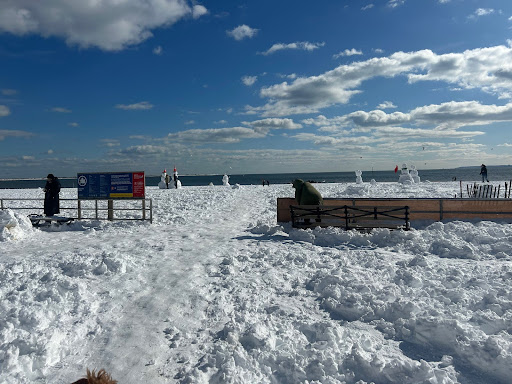
From Jan.23 to Jan.27, a major snowstorm — informally called “Winter Storm Fern” swept across a large swath of the United States. In four days, it devastated 24 states and killed at least 115 people, making it the deadliest storm in North America since Winter Storm Uri in 2021.
Fern’s impact on New York was brief, but devastating. The storm killed at least 26 people in the state, and officials declared a state of emergency.
The slow disintegration of the snow day began in 2019, when New York City added more official holidays to its public school calendar. To maintain the required minimum of 180 school days per year, the city converted snow days into remote learning days.
In September 2022, then-Chancellor David Banks confirmed that classes would operate online during severe weather.
“So, sorry kids! No more snow days, but it’s gonna be good for you!” Banks said in a Sept. 6 interview with amNY.
Reading his overly confident remarks, I questioned his claim. I thought back to the snow days I experienced from elementary school through middle school. In that reflection, nothing stood out that justified Banks’ enthusiasm. The snow days I had, though sparse, were always a pleasant and welcome interlude from the thumping routine of daily classes; there were days that I would spend outside with friends or, if the weather was too unforgiving, at home with family. Were they bad for me? Would getting rid of them have made me a better student?
In contrast to the oft-promoted view that remote snow days help “make up” lost class time, online courses can introduce complications that would hinder, rather than help, one’s learning. Moreover, certain classes that require a deep engagement, such as language courses, are less compatible with the structure of remote learning.
“It was a less-than-pleasant experience. I couldn’t really focus, which is less than optimal for a language class,” said Julianne Braunstein, a senior majoring in classical archaeology at Hunter College. “Still, it was better than navigating the snow and ice mounds to and from the train station.”
A 2014 study by Harvard Kennedy School Professor Joshua Goodman supports Braunstein’s experience. Goodman found that snow days are not detrimental to a student’s learning and that instructional time lost to closures can be recovered.
Although the academic benefits of shirking snow days are nebulous, students consistently described a strong sense of nostalgia and emotional attachment to them. For those who grew up with traditional snow days, they are associated with fun, anticipation and childhood innocence.
“As a kid, one of my favorite parts of snow days was the anticipation, the question of ‘Will it snow enough? Will it stick or melt?’ Today’s kids are robbed of anticipation so they can endure a less effective manner of learning,” Braunstein said.
Braunstein’s remarks point to another reason snow days linger in our memory
: spontaneity. While most school closures are preplanned and anticipated, a closure due to snow would often come the night before, or even the morning of. As we inch closer and closer to adulthood, these pleasant and simple surprises begin to become increasingly limited.
“An unexpected day of rest brought me a lot of joy as a kid. I think that the element of surprise made it much more enjoyable than school closures over holidays,” said Hunter freshman pre-med student Sarah Wu.
Lyra Calub, a freshman double-majoring in Human Biology and Anthropology, offered a more practical perspective:
“Traditional snow days should probably be reinstated to give people the chance to take care of their domestic troubles and issues,” Calub said. “The point of a snow day is to keep people safe.”
On Monday, Feb. 22, Mayor Mamdani announced that schools would close, and students would have a traditional snow day, the first of its kind since 2019. Regardless of one’s opinions on the merits or ramifications of this decision, the snow day persists as a symbol of simpler, purer times. I am happy that — even in its increased rarity — it’s managed to grant another generation of kids the joy of a class-free winter day.

 The Envoy
Leave a Reply