
Over the past few days, critics and social media users have criticized a controversial Converse advertisement that was released on Aug. 27, 2026. Converse, an American shoe company known for its unique and iconic campus shoes, promoted its wider Chuck 70 X campaign featuring Karina, the South Korean singer and rapper which sparked conversations worldwide.
In this ad campaign, Karina was shown wearing a white dress while standing in a silhouetted star figure and holding a pair of Converse, which many speculated used eerily imagery similar to the Ku Klux Klan’s practices.

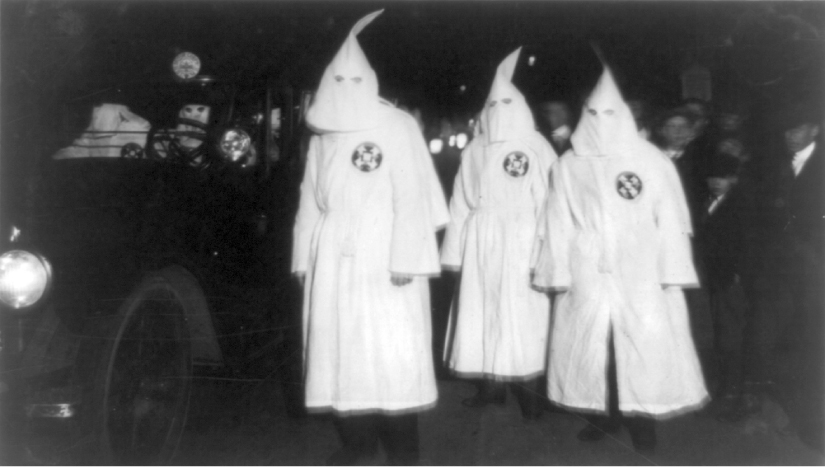
Founded in the early 1860s, the Ku Klux Klan is an American white supremacist hate group that originally targeted newly freed African Americans and committed heinous hate crimes against them.
Many critics have argued that the ad resembled the white robes that KKK members were known for wearing in the late 1800s. Others also argued that Kaina’s way of holding the black pair of Converse could represent a lynching. The group primarily used public lynching rituals against African Americans to establish a form of power over them. Many argued that the Converse looked as though they represented a lynching victim’s head.
Although many argue that it is a controversial ad, others defended Converse and said they do not see the ad campaign as a racist attack. Instead, individuals say that nowadays, people assume every post has a secret agenda or mission behind it.
The Envoy interviewed several Hunter College students to get their perspectives on the controversial ad.
Hunter College student Joshua Montes said the advertisement’s imagery initially made him think of something different.
“The lighting of the shoot making it look like the shoes are on a person that’s hanging? That’s definitely done in poor taste and was the first thing my eyes were drawn to.” Montes said.
The student said the star-shaped lighting did not seem immediately offensive to them, but they understood why others interpreted it differently.
“The ray of light to me is innocent enough at first glance, but I understand completely how other audiences would have perceived it as a Klan hood,” Montes said.
He said Converse should have had more people reviewing the advertisement before releasing it.
“It is the company’s responsibility to ensure it has a diverse range of people who review these adverts and make the necessary comments and feedback to try to catch these issues in the first place,” Montes said. “The company is responsible for responding to the public’s opinions and making the necessary reparations if the outcry is loud enough.”
Congressman Troy Carter, representing Louisiana’s 2nd congressional district, released a statement regarding the ad’s insensitivity. In his statement, he expressed his own personal anger towards the advertisement.
“There is nothing creative or artistic about it. It is racist, reckless and deeply offensive.” Carter said. “I am a Black man … Where I come from, the image of Black people hanging from trees is not ancient history.”
Political representatives have criticized Converse for its lack of consideration for America’s history. Historically, in the South, after the Emancipation Proclamation, the United States Government primarily prioritized the white population over black communities through segregation laws and Jim Crow Laws. During this time, the KKK’s influence increased throughout the nation, and its beliefs and practices could be seen through violence and intimidation against Black communities.
One example was the presence of sundown towns throughout the United States, where black people were discouraged or prohibited from remaining in certain communities after sundown and faced threats and violence, including lynching. Many have pointed out that advertisements like these reinforce racial prejudice and allow harmful stereotypes to continue in America.
Although Converse told CNN, in a statement, “We understand why this image is deeply upsetting and recognize that we got this wrong,” the company is still trying to remove the advertisement from the internet, even after removing it from all their channels. Many individuals are still upset after the advertisement has continued to resurface over the past couple of days.
Other CUNY students also shared their thoughts on the controversial advertisement.
Nitara Dehiwalaliyanage, a marketing/business management student double majoring in film and media studies, said that her studies have helped her understand the precautions companies need to take when creating campaign content.
“I’ve sat in rooms where people are actively brainstorming and creating content for campaigns,” Dehiwalaliyanage said. “There is a lot of meticulous thought that goes behind it.”
For Dehiwalaliyanage, the public’s response to the advertisement has revealed more about marketing strategies and racism in society.
“I hate the argument I see where people are saying, ‘it’s just an accident,’” Dehiwalaliyanage said. “People don’t accidentally forget to keep racist implications within a campaign.”
Dehiwalaliyanage said companies have a responsibility to acknowledge the messages their campaigns can send, even in moments when those messages aren’t intentional. The ad has raised several questions regarding companies and their marketing strategies.
The backlash has also sparked speculation about how Converse responded after the advertisement began receiving criticism a few days after the release. The sneaker company has now removed the social media post from all its platforms and has publicly apologized and stated that they had no harmful intentions when publicizing campaigns.
Ultimately, over the past few years, several marketing strategies have gone viral on social media because of controversies, from Sydney Sweeney’s American Eagle ad where the company says “Sydney Sweeney has great jeans” to the Novig ad where she’s explicitly nude and promoting the sports gambling app, which sparked controversy over female autonomy worldwide.
With ads like these, many have started to question whether American media is moving backward rather than forward, with publicity strategies using racism, sexuality and gender roles to gain further attention from the public.
In reference to the Converse ad, Carter said, “Black pain is not a marketing prop,” Carter said. “Lynching is not a creative concept. The Ku Klux Klan is not an aesthetic.”


Leave a Reply