The Mamdani administration’s decision to move the Mayor’s Office to End Domestic and Gender Based Violence (ENDGBV) within the newly created Office of Community Safety (OCS) sparked hope for city officials but raised concerns among some advocates and survivors.
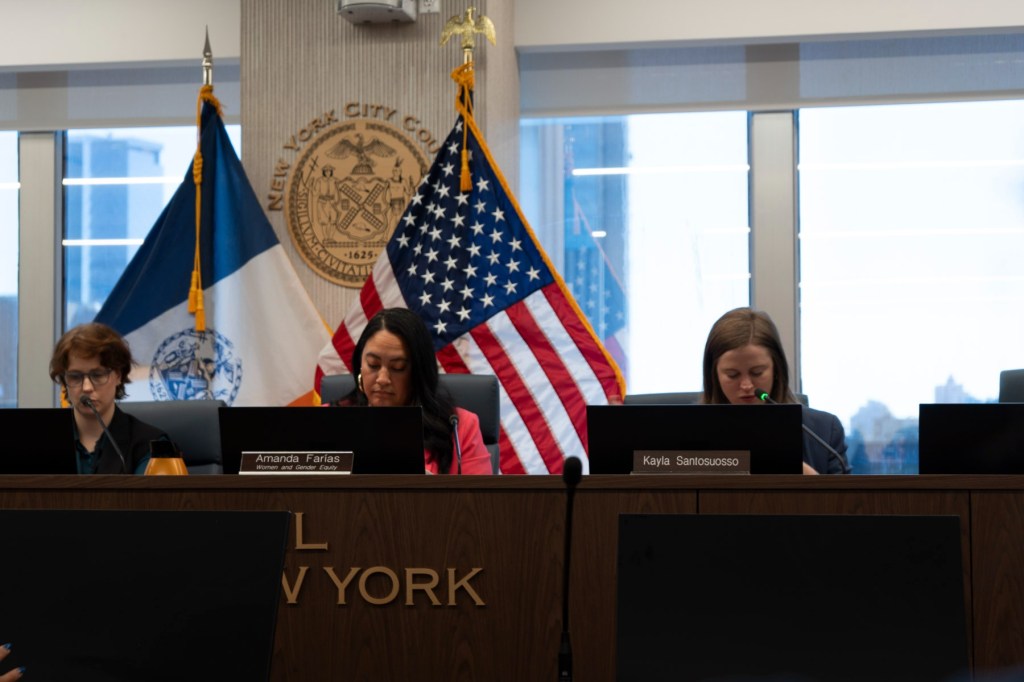
The Committee on Women and Gender Equity’s held an oversight hearing, at City Hall on Wednesday, Sept. 30. on how the change will impact crisis, response, support victims and survivors, and prevent domestic and gender-based violence.
ENDGBV began in 2001, focused on addressing domestic and gender-based violence by developing and sharing accessible services to survivors, their families, and communities through collaboration with organizations and public advocacy.
Councilmember Amanda Farías, chair of the Committee on Women and Gender Equity, began the hearing by acknowledging the sexual assault allegations involving former Cornell University students and how the Tompkins County District Attorney’s decision to reopen the criminal investigation emphasized questions about how institutions respond when gender-based violence is reported.
“It’s a reminder that gender-based violence does not exist in isolation, it exists in our homes, on our campuses, and our workplaces, and our communities, and within the systems that are supposed to protect us,” Farías said. “We have an opportunity and a responsibility to ensure that preventing and responding to gender-based violence remains a central priority for our government.”
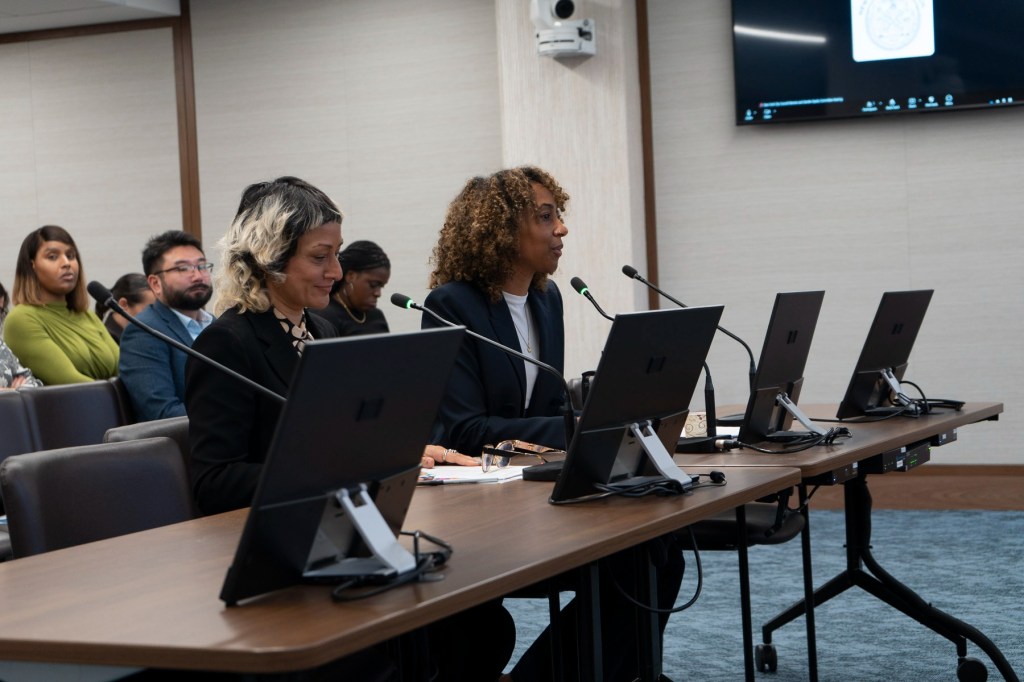
Ayesha Delany-Brumsey, commissioner for the OCS, said by placing ENDGBV alongside the Office for the Prevention of Hate Crimes, the Office of Community Mental Health and the Office of Survivor Safety, it will strengthen coordination on preventing violence and promoting community safety across New York City.
Seloni Sethi, commissioner for ENDGBV, confirmed OCS will maintain their employees and continue working directly with existing contractors.
Recently, victim advocates from the Crime Victim Assistance Program (CVAP) worked with the NYPD and ENDGBV to create informational posters about the program, Sethi said.
However, advocates are concerned whether redirecting oversight under OCS into a broader public safety initiative could reduce the visibility of ENDGBV and limit the services that address the unique needs of domestic and gender-based violence.
“It’s so important that we continue to have a standalone office,” said Judy Harris-Kluger, CEO of Sanctuary for Families. The issue connects to housing, homelessness, poverty, childcare, public health, criminal justice, immigration and economic security. It should not be treated as a secondary issue within a broader public safety office, she said.
Gender-based violence could be connected to community safety, but the mechanisms for which it occurs is complex, said Avani Singh, president of the United Women’s Alliance at John Jay College. “People often overlook how gender-based violence impacts people in the littlest ways.”
Society doesn’t categorize catcalling or online harassment as a form of gender-based violence. It’s an issue that requires attention. Putting ENDGBV under OCS diminishes what gender-based violence is, she said.
Harris-Kluger cited the Citizen’s Committee for Children’s report, where more than 1 in 5 families with children in the shelter system identified domestic violence as the reason for their homelessness.
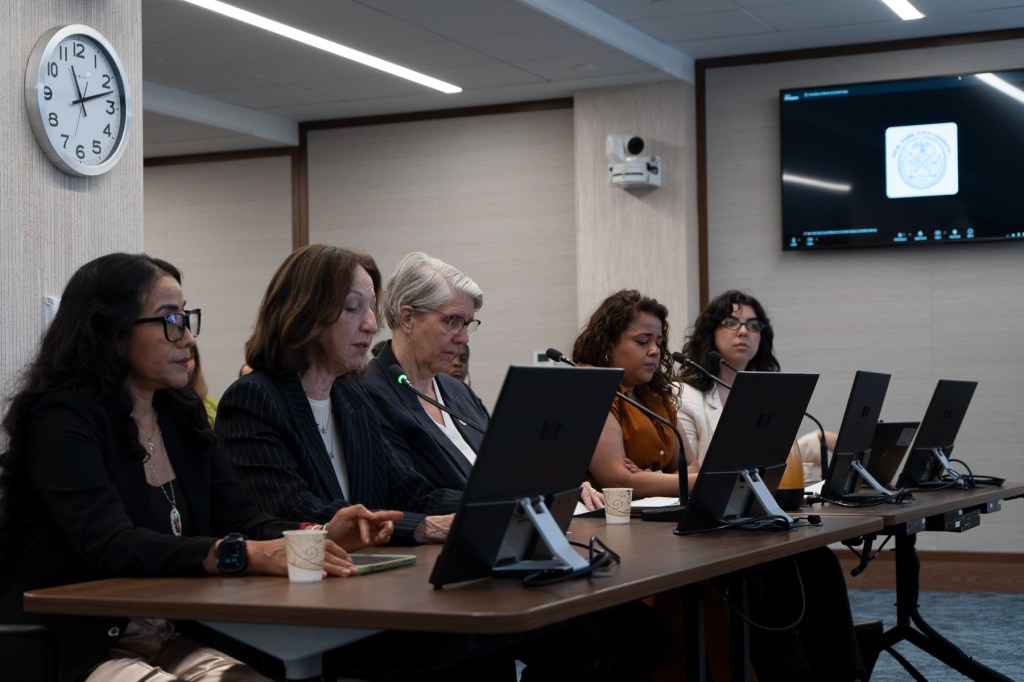
Safe Horizon’s CEO Liz Roberts said her organization recognizes the value of placing ENDGBV under OCS, but is concerned that adding layers between leadership and the administration makes it harder for the office to advocate for survivors.
Survivors and advocates testified at the hearing also called for greater involvement in the decisions about the restructuring.
Co-chair of the Advisory Council at ENDGBV, Stephanie Woodbine said survivors should be involved in the policymaking process.
“We have yet to hear from our administration, addressing the issue of domestic violence,” Woodbine said. “We fear that the demotion of ENDGBV will cut survivors and partner organizations direct access to leadership.”
Iman Gad, manager of policy and advocacy at Girls for Gender Equity urged the mayor to speak out publicly against gender-based violence as “it pertains to community safety” and to address “survivors’ unmet needs for permanent housing, continuous cash assistance, and access to affordable immigration related legal support.”
Angelina Rosado, co-founder and executive director of the non-profit survivors advocacy group Sisters in Purple, also spoke about her experience as a survivor.
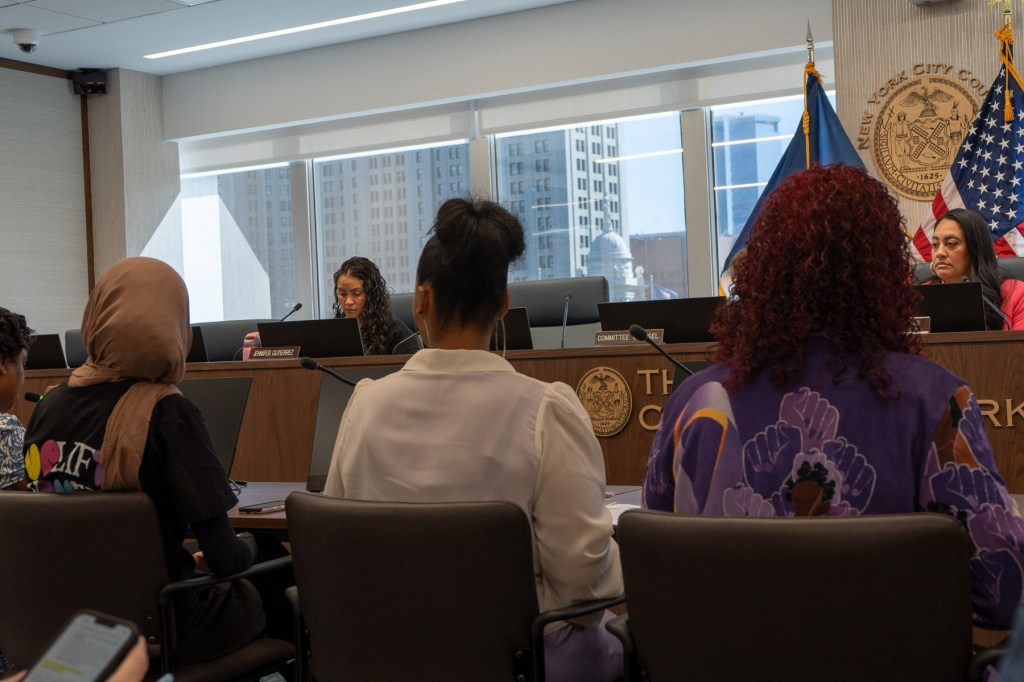
Domestic violence is connected to housing instability, poverty, child safety, welfare, mental health, and gun violence, where coordinating services can save lives. ENDGBV must create a system where there’s a pathway for prevention, she said.
“I know where the systems break because I lived it,” Rosado said. “We see survivors getting handed a list instead of a warm connection.”
As the restructuring continues, advocates are asking the administration to ensure survivors remain involved in the decision making processes, where domestic and gender-based violence receives specific attention, funding, and appropriate leadership.
“Survivors must have a seat at the table,” Angie Martinez said. “Not just as people being served, but as partners in shaping the systems designed to serve us.”


Leave a Reply