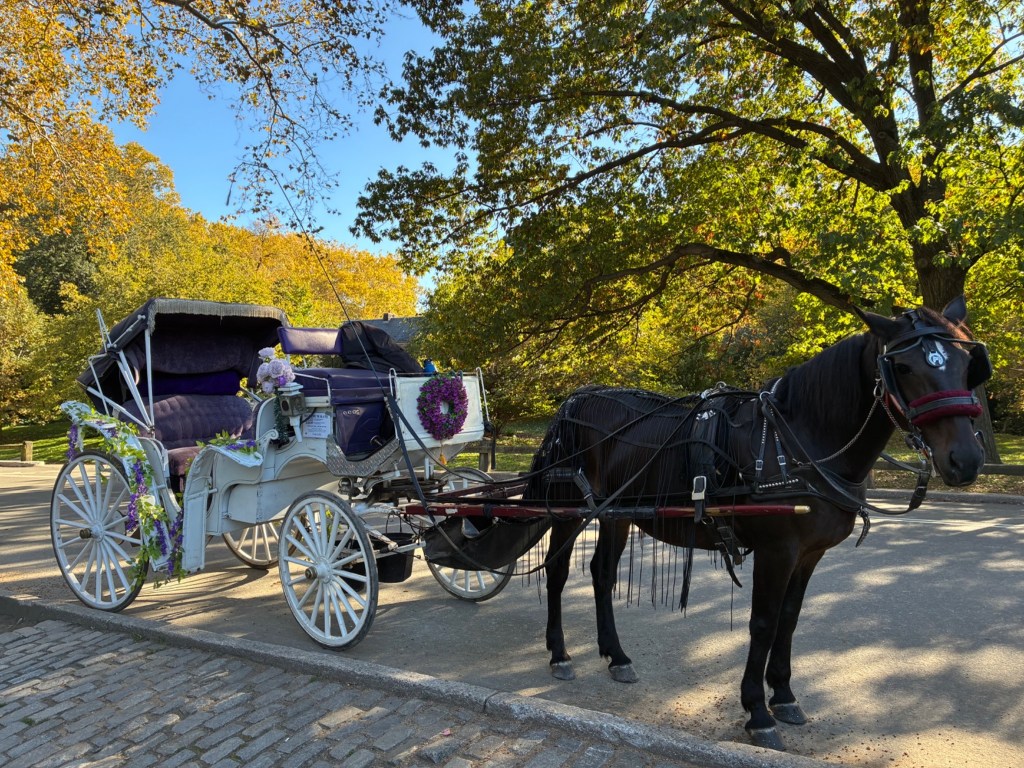
The New York City Council voted to end the city’s 168-year-old horse carriage industry on Thursday. Intro 943-A, or Romanch’s law, was named after Romanch Mahajan, the teenager that died after falling off a runaway horse earlier this year.
Animal advocacy organizations have been campaigning for years to end the use of horse-drawn carriages. Edita Birnkrant, executive director of the animal rights nonprofit NYCLASS, called the industry “obsolete” and added that it poses a public safety issue in the city’s changing landscape. She added that horses are “skittish, powerful animals” who get easily frightened and run.
According to the The Central Park Conservancy, in the year before Mahajan’s death, there were seven accounts of horse-carriage related accidents in which people or horses have been injured. In recent years, three horses have collapsed and died in NYC streets or in Central Park. Just one week before Mahajan’s death, a horse named Deniz died after consuming a significant amount of the toxic Japanese yew plant.
Although the council has been going back-and-forth on this mandate for almost two decades, Mahajan’s death triggered the final push needed for a successful passage of the bill.
The bill prohibits owners from transferring their horses to other horse carriage businesses or to slaughter houses, and mandates that the Mayor establish a workforce transition plan by April of 2027. It also hopes to support carriage drivers with future employment opportunities and owners with finding suitable homes for their horses. The plan states that it will “consider” offering compensation to owners who paid thousands of dollars to get medallions, the official licenses that grant them ownership over the carriages.
“They’re going to get a just transition,” Birnkrant said.
However, many carriage owners and drivers are concerned about the city’s plan and fear that after the law phases out, it will take away their livelihoods and they won’t have the means to support themselves. A lot of them believe that they will become homeless as a result of this law.
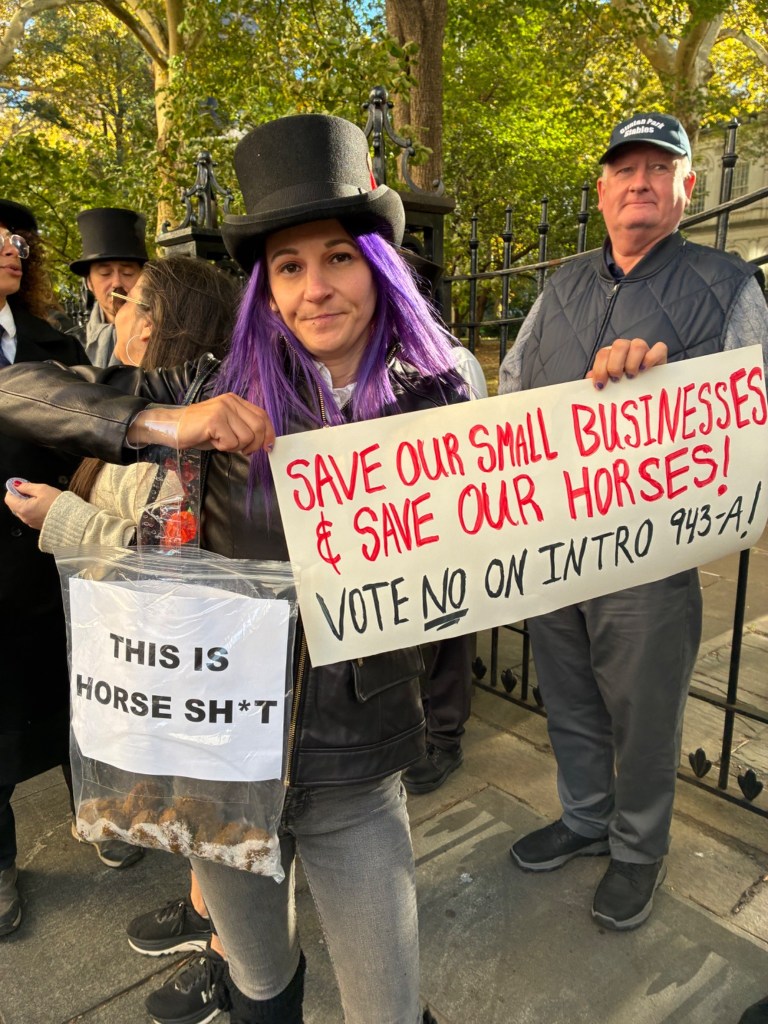
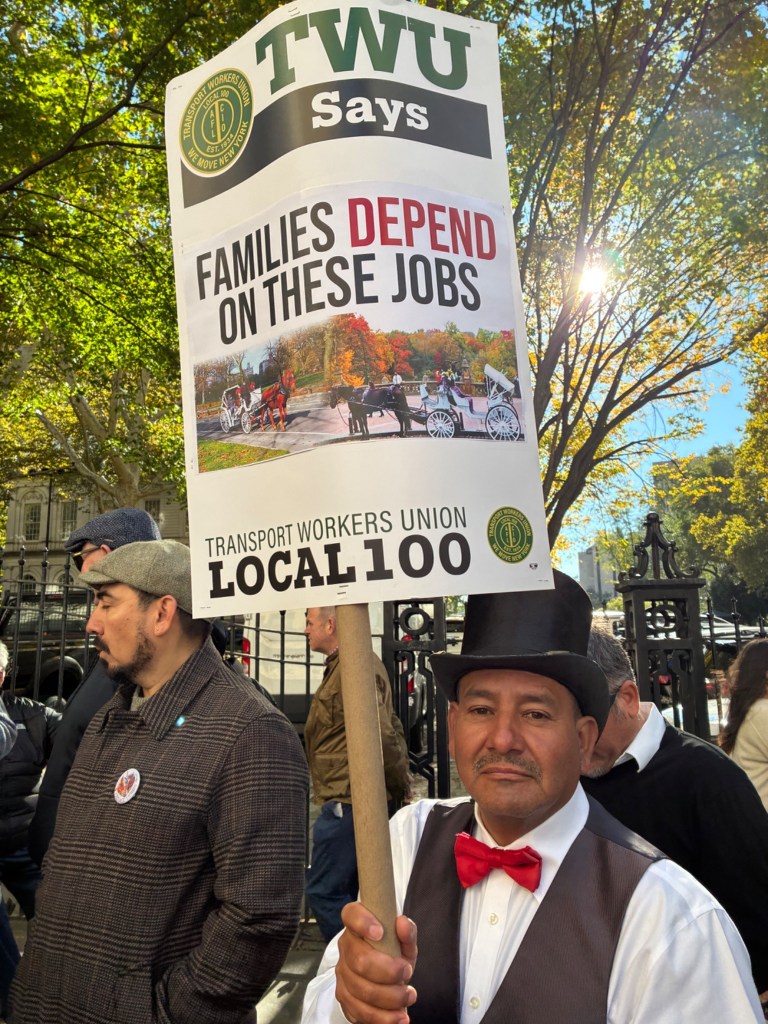
Protestors on October 22 in front of City Hall (Photo Credit: Sauda Afrose)
“This bill doesn’t offer anyone anything. Nothing concrete, no guarantees,” said Jill Adamski, a horse carriage driver.
Medallion owners, some of whom have payed $100,000 to $300,000, mistrust the law’s vague wording and feel that their hard-earned investments will amount to nothing once the business stops.
“Who can give it to me? Okay you take my business, give my last 25 years back to me,” said Ahmet Bilici, a driver and medallion owner.
Many drivers have also argued that carriage horses have been bred to do this job for years, and their bodies need this exercise to function. They added that, legislators who have proposed this bill haven’t researched about horses and didn’t come to speak with workers before moving forward with the bill. They maintained that their horses are well taken care of and they haven’t died from being overworked but rather from natural causes.
“The safest thing for our horses is to continue working,” said Danielle Slot, a driver.
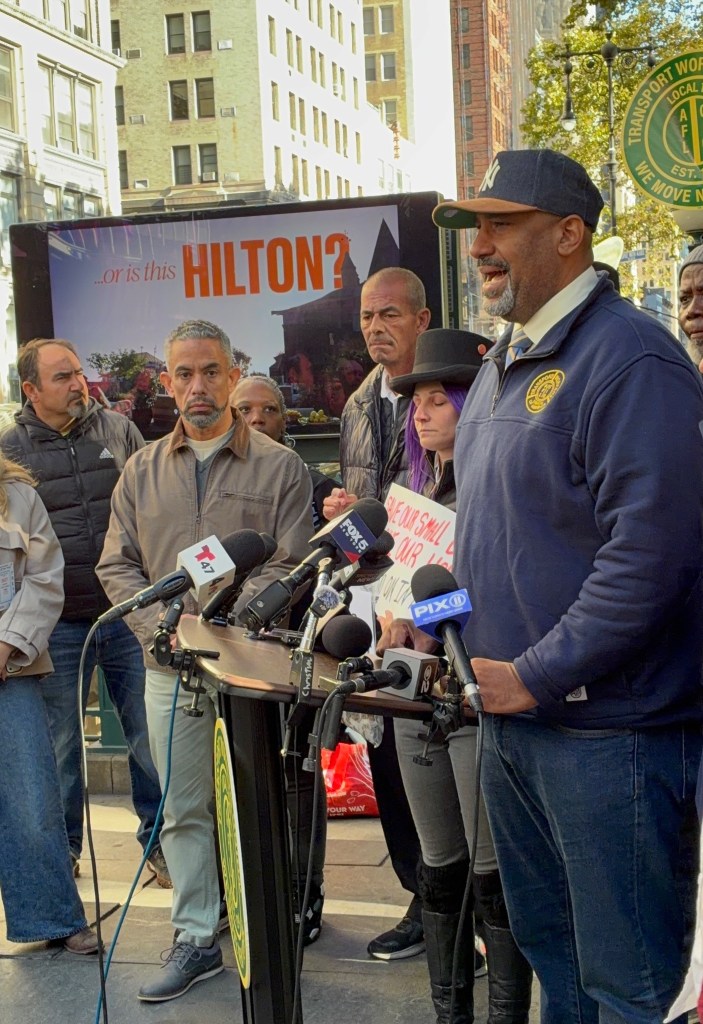
TWU Local 100 Administrative Vice President Alexander Kemp (Photo Credit: Sauda Afrose)
Drivers and owners have also questioned why the city isn’t taking any steps to regulate or ban e-bike use in the park since they have caused more fatalities than horse carriages.
Birnkrant pushed back, saying that e-bikes are more of a reason to remove horse carriages as it shows how the city space has evolved. She added that the city is taking measures to regulate e-bike use, pointing to the 23 recent legislative proposals the council is examining to make city streets safer for e-bikers, other vehicles and pedestrians.
Transport Workers Union (TWU Local 100), the main organization representing horse carriage drivers and owners, promised to file a lawsuit against the city in defense of the industry. They believe that the city’s actions are illegal, stating that the bill lists no specific protections for the workers and animals.
“This is a vote of big business against working class New Yorkers” said Alexander Kemp, the administrative vice president of TWU Local 100.
Kemp also argued that the people behind NYCLASS pushing the bill are real estate owners who have an eye on the West Side stables which “they’re dying to build skyscrapers on.”
Councilmember James F. Gennaro, who proposed Intro 937 to improve horse carriage regulations and avoid a complete ban, called the bill “worst episode of legislative malpractice” he has ever seen.
However, Birnkrant challenged these statements arguing that carriage driving is akin to “part-time work” and it offers no real benefit or worker protection to drivers. She added that if drivers are injured they don’t receive insurance, sick leave, disability or any health benefit to support them.
“The mayor himself, who is a man of his word, said he is taking ownership of this,” Birnkrant said. “He is committed to finding better, safer, wonderful jobs for all of these workers.”
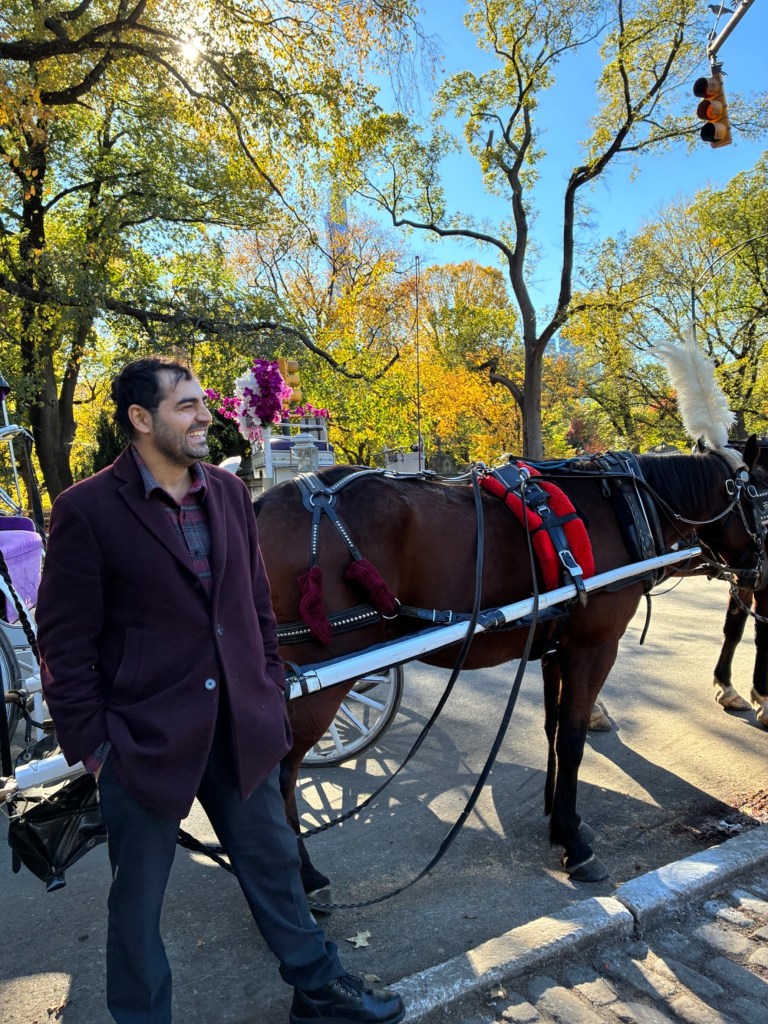
Horse carriage owner and driver Onur Altintas with his horse (Photo Credit: Sauda Afrose)
Birnkrant added that the city is also “bending over backwards” to find safe homes for horses saying that they’re building a safety net which sometimes horse owners themselves don’t provide.
“There’s a huge network of sanctuaries and rescue farms lined up. Literally more homes available than there are horses,” Birnkrant said.
Horse carriages were first used for tourism purposes in 1863 in Central Park. In 2007, City Comptroller Bill Thompson released an audit of the industry highlighting several issues such as insufficient access to water and concerns about animals overheating. Later that same year, Council Member Tony Avella proposed the first bill to ban the horse carriage industry.
In 2010, Council Member Melissa Mark-Viverito introduced another bill calling to replace horse carriages with electric vehicles. Former Mayors Bill de Blasio and Eric Adams have also unsuccessfully tried to phase out the industry.
Romanch’s Law was initially called Ryder’s Law, named after the horse that collapsed in Hell’s Kitchen during peak summer heat. In response, Council Member Bob Holden introduced a bill to halt the issuance of new licenses. Although the law initially fell through, it was reintroduced by Council Member Christopher Marte just days after Deniz’s death.


Leave a Reply