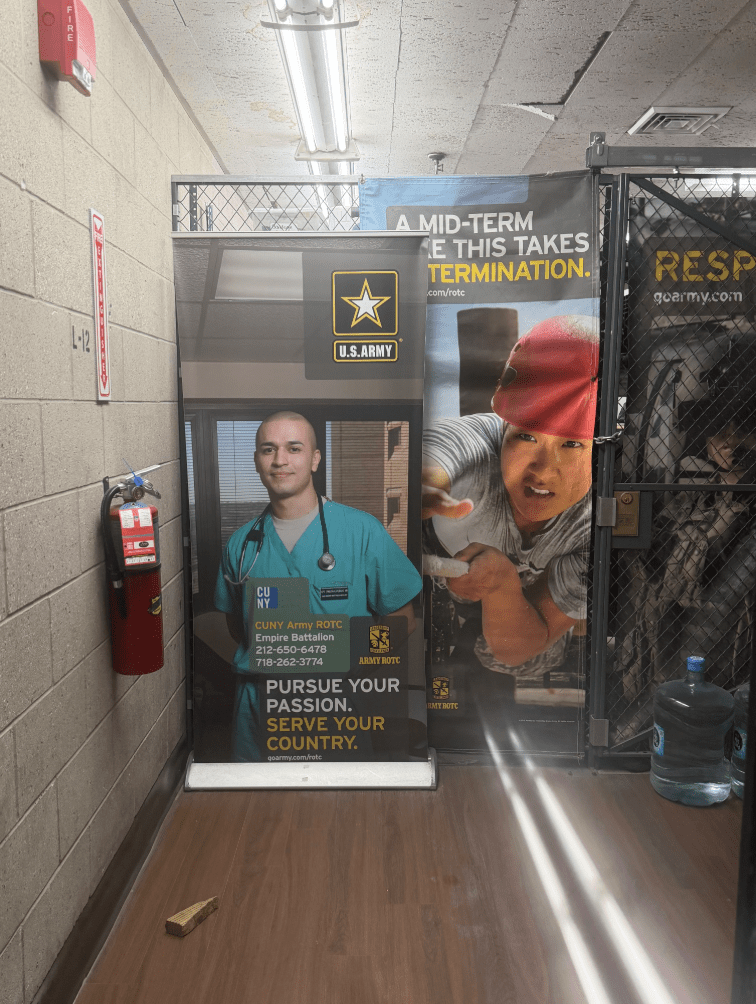
More than a decade after CUNY professors led a successful campaign to keep military training off two CUNY campuses, the Reserve Officers’ Training Corps has quietly rebuilt a foothold at City College, where 102 cadets are now enrolled.
ROTC operates at only two of CUNY’s 25 campuses — City College and York College, but is open to all CUNY students. On a recent afternoon, a handful of cadets gathered in the basement of the Marshak Building, having just returned from a 12-mile training run through Van Cortlandt Park. Their instructor said he could not discuss the program until clearing comment with his supervisor. When I followed up Tuesday, an officer said his commander had not granted permission for him to speak on the record.
The program’s revival in the Northeast was a long-standing priority for the Pentagon, according to Seth Kershner, co-author of “Breaking the War Habit: The Debate over Militarism in American Education.”
“Expanding into the CUNY system and the Northeast generally had long been an important priority for defense analysts — largely to diversify the officer corps,” Kershner said. “If you have this geographic concentration of ROTC in the South, you’re going to get mostly Southern folks in your officer corps.”
Nationally, college ROTC enrollment has fallen from more than 1 million during the Vietnam War era to roughly 50,000 today, Kershner said.
ROTC’s modern comeback at elite and urban campuses began around 2010, after the repeal of the military’s “Don’t Ask, Don’t Tell” policy removed a long-standing argument used to keep the program off campus. Former President Barack Obama, Kershner said, “felt a personal responsibility to promote ROTC, especially at elite campuses.”
CUNY, where faculty had long organized against military programming, took longer to readmit the program. “Once these programs have been implanted, they’re incredibly difficult to dislodge,” Kershner said.
How the program will fare under a second Trump administration is less clear. Project 2025, the policy blueprint produced by allies of the president, calls for requiring high school students to sit for the military’s ASVAB aptitude test before graduation and for expanding Junior ROTC from about 3,500 high schools to 6,000.
ROTC and JROTC in New York City
Reserve Officer Training Corps (ROTC) at colleges and Junior Reserve Training Corp (JROTC) at high schools. May 1, 2026.
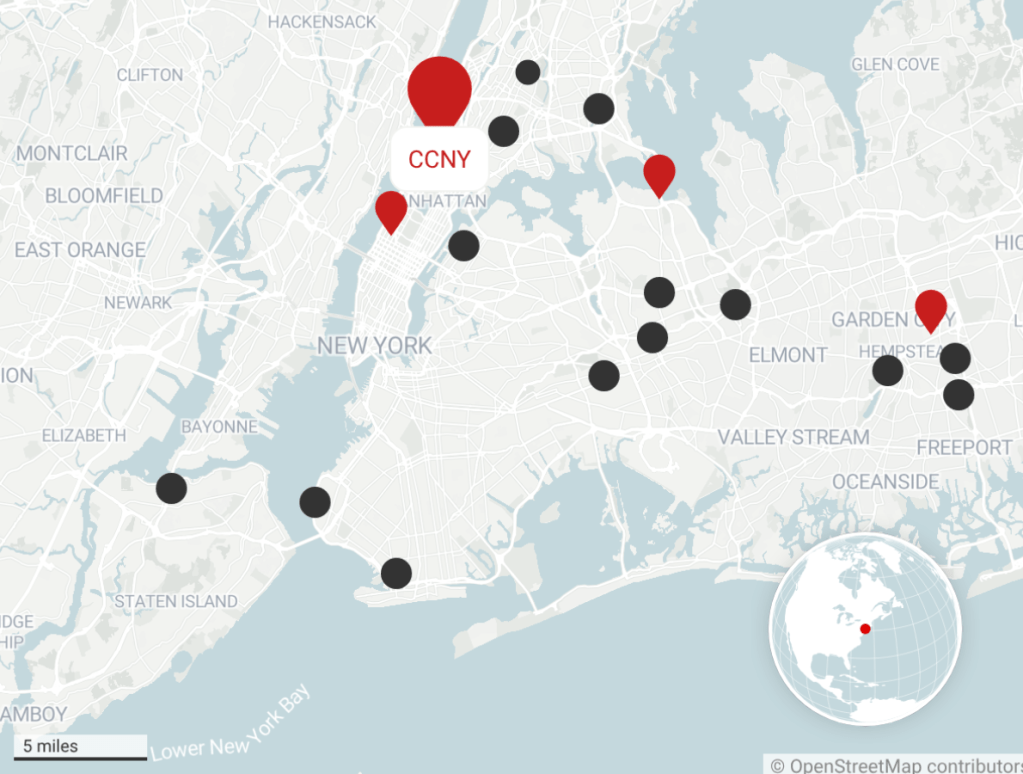
In February 2014, CUNY Medgar Evers College voted through campus governance to remove ROTC after a faculty- and student-led campaign that included an on-campus debate between anti-war veterans and military personnel assigned to the new program. Roughly a year earlier, ROTC had been restored at three CUNY schools — City College, York College and Medgar Evers — through agreements that bypassed campus governance, anti-militarization organizers say.
Conor Tomás Reed, an independent scholar and author of “New York Liberation School,” who was an adjunct at Medgar Evers during the 2014 campaign, said records obtained through Freedom of Information Act requests by an anti-militarization committee within the Professional Staff Congress, the CUNY faculty and staff union, documented “closed-door, backroom decisions that violated campus governance policies” at all three campuses.
Reed said the ROTC return was part of a broader 2013 effort to expand the military’s footprint across CUNY that also included an initiative to hire what he called “warrior scholars.” Among them was retired Gen. David Petraeus, the former CIA director and co-author of the U.S. military’s counterinsurgency manual, who taught a Macaulay Honors College seminar in the fall of 2013 amid sustained student protest and departed after a single semester.
Reed said the 102-cadet figure at CCNY suggested the program had not gained traction.
“This honestly seems like a curiously small number,” Reed said. “It’s actually somewhat damning. It shows that CUNY students aren’t really interested in this program.”
Similar campaigns at City College and York College did not produce the same result, Reed said. Anti-ROTC organizers at those campuses were stretched thin by overlapping crises — the emerging Black Lives Matter movement, the 2014 Israeli military operation in Gaza, and what Reed described as targeted pressure on CUNY organizers, including a New York Police Department demand that two student organizers turn themselves in for a night in jail and the seizure of a longtime radical student space at CCNY known as the Guillermo Morales/Assata Shakur Center.
“There were so many issues,” Reed said.
The most visible recent anti-war organizing at CCNY came in April 2024, Reed said, when students built a Gaza solidarity encampment on campus that was cleared by police.
Counter-recruiting groups, which once mobilized against ROTC and military recruiters on high school and college campuses, are a fraction of the size they were during the Iraq War, when a 2009 convention in Chicago drew about 250 attendees. Kershner said new energy may be building in response to Trump-era policies but described the current movement as small and locally focused.
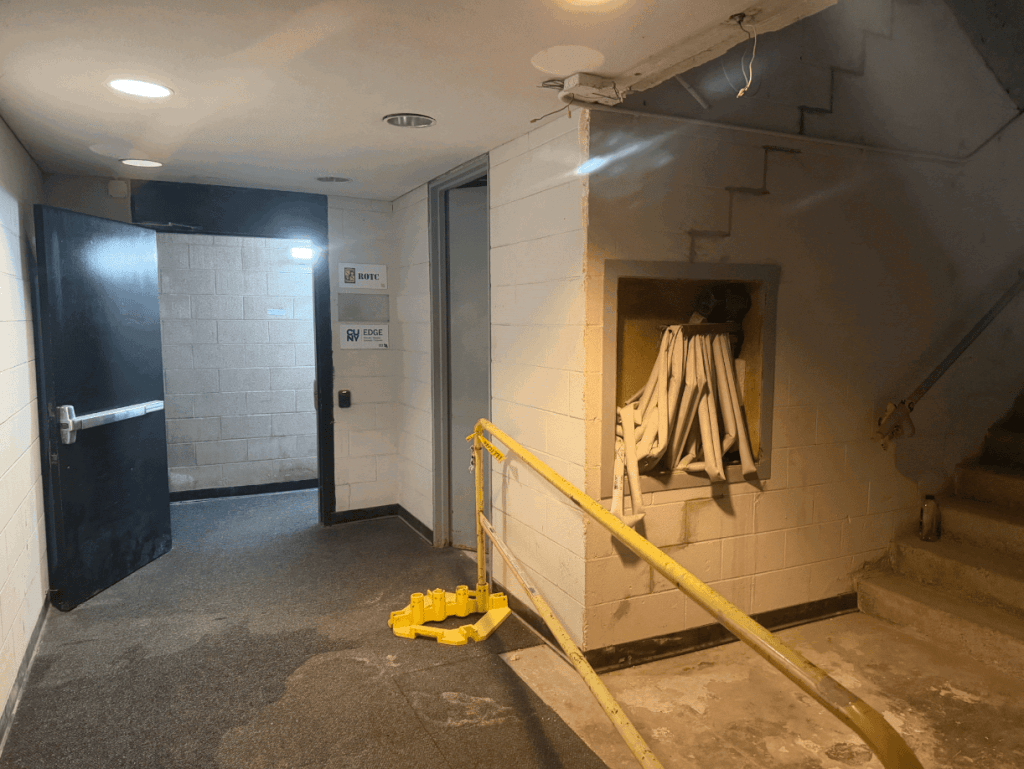
For now, the most visible signs of ROTC at CCNY remain the kind on display in the basement of the Marshak Building: cadets in uniform catching their breath after a long run, and an instructor whose chain of command has declined to make him available.


Leave a Reply