The Envoy interviewed Hunter College students and faculty for their thoughts regarding the controversy behind the ad.
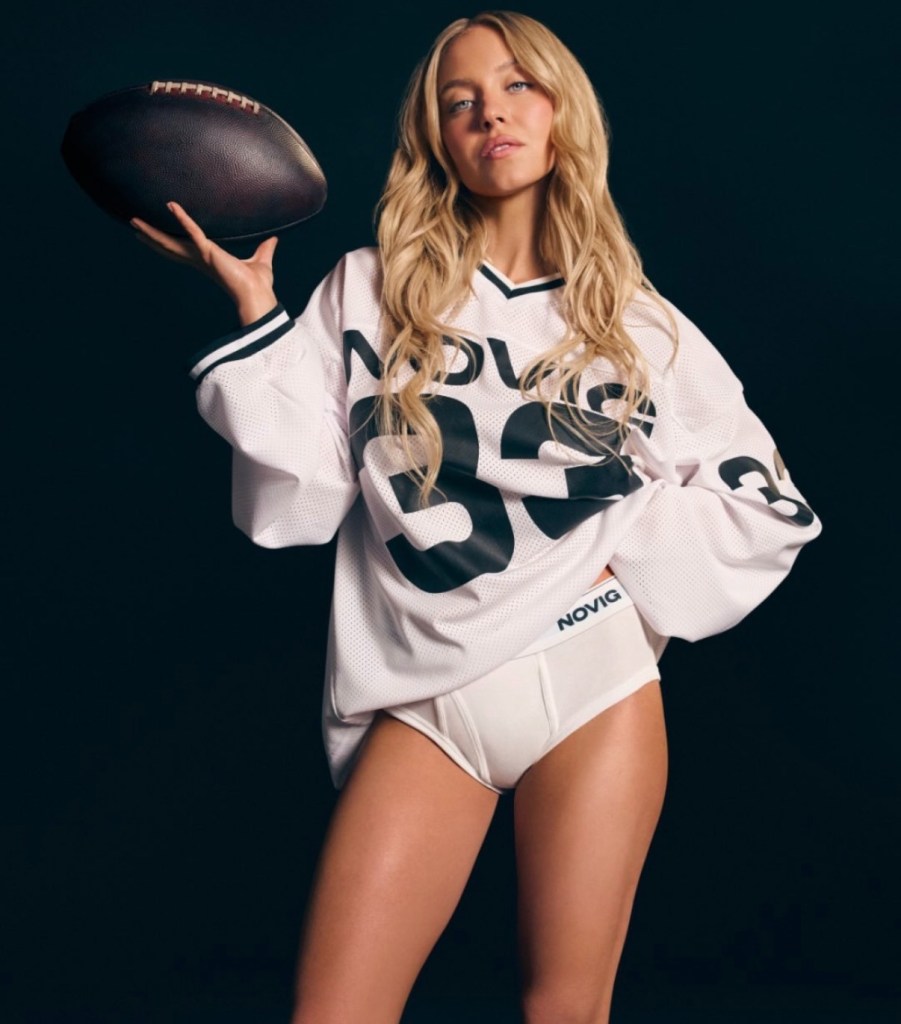
Sydney Sweeney, known for her role in Euphoria, is once again the center of controversy after appearing almost nude in a minute-long ad for the sports prediction market app Novig.
The advertisement, released in early September 2026, has reached more than 60 million views on Novig’s Instagram post.
Strategic lighting and positioning, often with a single piece of sports gear shielding the Euphoria actress’ body, kept her silhouette as the visual focus of the ad. Sweeney repeats the tagline, “Just Sports,” to differentiate Novig from competitors as strictly a sports trading platform.
Novig launched nationwide in August 2026, becoming one of the leading sports trading apps, among competitors like Kalshi and Fanatics Markets.
The ad has sparked conversation around the sexualization and objectification of the female body. Female athletes in particular have spoken out to reject the dangerous notions they feel the ad reinforces about women in sports. Many have said that they feel the ad diminishes the role of women in sports and reduces the female athlete to an object of male desire.
“Sydney Sweeney, this is what women in sport look like…muscles, hard work, sweat, blood, tears…” said the British sprinter Amy Hunt in an interview with BBC after a race at the World Athletics Championships.
American Paralympic athlete Beatriz Hatz wrote in a TikTok caption, “Actually so disgusted and disappointed in her ad…she’s setting so many women back…We deserve to compete at the peak of our ability and be seen as athletes.”
Even as a woman outside the athletics realm, Ayanna Obeng, who studies nursing at Hunter College, felt misrepresented by the ad.
“Because we are capable of a lot of things, other than being, what, sexual appeal to men?” Obeng said.
Maria Birtriaga, a student in the early college program at Hunter, said she felt the ad was “intentionally sexual.” Birtriaga, who has been playing girls soccer for six years, added, “It felt disrespectful…and you also have to think, now, ‘who is the audience for this, right?’”
People online are calling the ad simply inappropriate, and saying it exploits a vulnerable audience for sports betting. Matt Bernstein, an online activist with 2.4 million followers on Instagram, made a video with a picture of the ad on a Times Square billboard behind him.
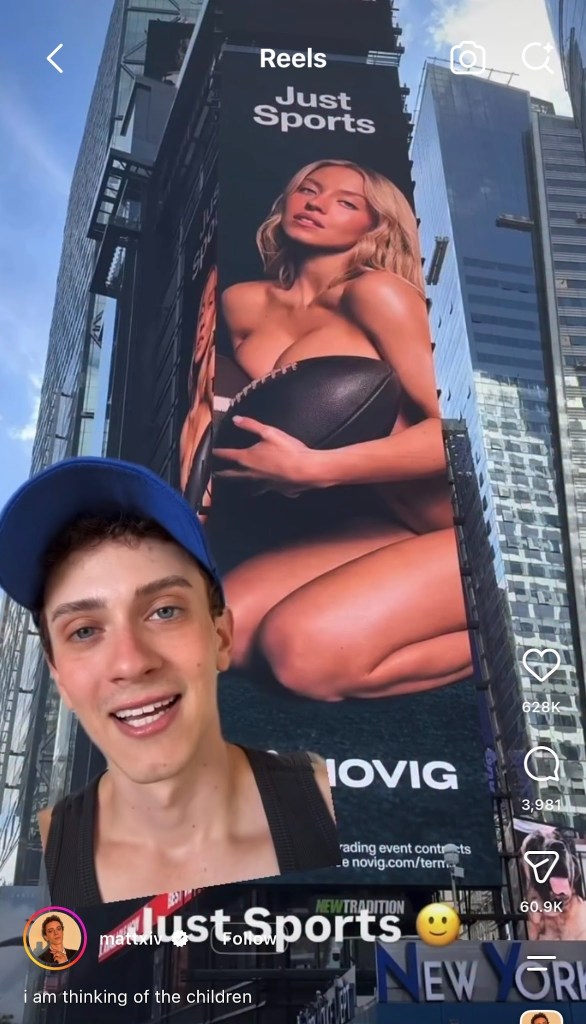
“I don’t think nude imagery is inherently sexual, but I’d be hard-pressed to argue that this nude imagery isn’t,” Bernstein said in the video.
Bernstein went on to highlight the ad’s true intention to promote gambling, “which as an industry, has a higher suicide rate than any other addiction, and which as an industry, is…targeting teenage boys,” he said.
The ad comes at a time when research shows that gambling addiction is on the rise, and sports betting users are reportedly young. According to a survey by the National Council of Problem Gambling from March 2026, “Younger adults report even higher rates of early sports betting and online casino play before age 21 compared to older generations.”
Sports prediction market apps like Novig function differently from traditional sports betting apps because users are technically betting against other players rather than “the House” or the company that sets prices. These markets are essentially federally regulated, legalized gambling services.
“A lot of people are losing a lot of money, and that can lead to a lot of mental and physical health issues as well,” said Professor of Women and Gender Studies at Hunter, Gizem Iscan, “It could lead to isolation, loneliness, and…even in extreme situations that we see, people lose their houses, they lose their jobs…due to this type of addictions.”
The overwhelming highs and devastating lows of gambling create an all-consuming desire for success that takes a mental toll on users. National Institutes of Health found in 2021 that people with gambling disorder (GD), “had the highest suicide rate of any addiction disorder with one in five GD patients having attempted suicide.”
“Young men are as lonely as they’ve ever been,” Max Somershaf, philosophy major and former Hunter basketball player, said, “they’re on their phones as much as they’ve ever been, or using social media for the wrong reasons.”
“I have friends who are super addicted to online gambling, and I think it’s just like taking advantage of it,” Somershaf said in reference to the ad.
“It goes back to the cliché ‘sex sells,’” Professor Iscan said. “It just raises the idea that, well, as a masculine figure, this is the woman you should desire, this is the woman you should look at. This is what you should be doing aside from sports betting. You should also be into a certain type of femininity or womanhood.”
Seemingly in response to the Novig ad controversy, Sweeney posted images of Rob Gronkowski, Serena Williams and other athletes from ESPN’s Body Issue on her Instagram story.
“All of those people that are posing or performing or on the cover of that magazine are sports athletes…Sydney Sweeney is not a sports athlete,” said Professor Iscan. That context is crucial, she said, “the focus is on achievement there, and the focus is on physical power.”
Despite all the negative feedback, many people don’t see anything wrong with the ad.
FOX News brought on a conservative activist, CJ Pearson, to share his thoughts on the ad. “Let’s talk about the only crime that Sydney Sweeney has committed: being a hot, blonde woman,” he said, and added that she was simply embracing her femininity.
This isn’t Sweeney’s first time facing backlash for an advertisement, or her second. In 2025, Sweeney partnered with Dr. Squatch soap to sell “Sydney Sweeney’s Bathwater Bliss,” a bar of soap that the company said contained the actress’ bathwater. Critics felt the product was ridiculous. Also in 2025, Sweeney was featured in an American Eagle ad, with the tagline “Sydney Sweeney has great jeans.” Critics argued that the ad perpetuated ideas of eugenics by implying that Sweeney — a blonde-haired, blue-eyed superstar — has ideal genetics.
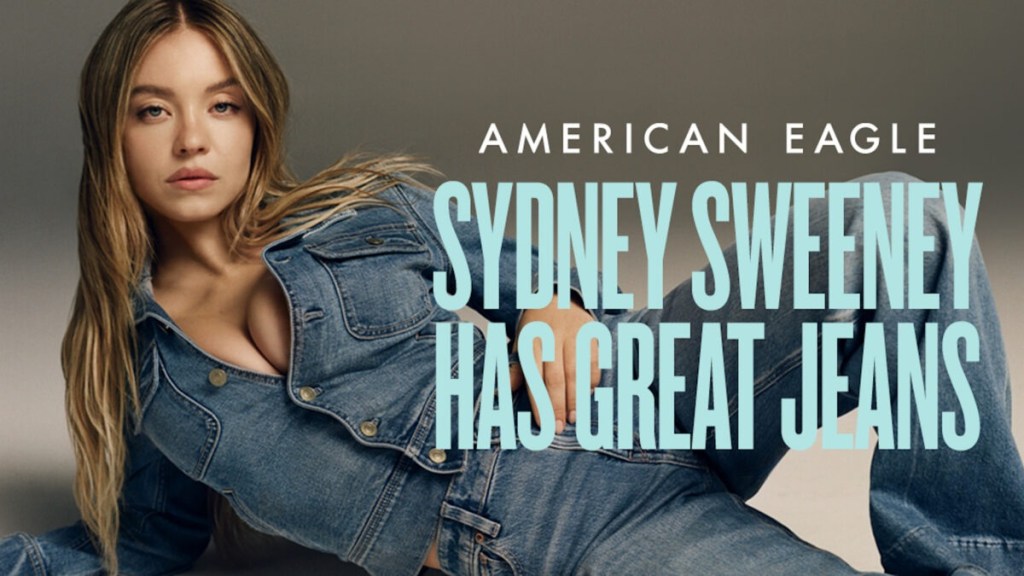
“But for someone to have already dealt with something like that to do this, it’s really kind of doubling down, kind of 2 middle fingers up as an exit,” Somershaf said.
After the American Eagle ad, Sweeney made it clear that she didn’t feel the need to justify her actions in an interview with GQ,
“I think that when I have an issue that I want to speak about, people will hear,” Sweeney said.


 The Envoy
Leave a Reply